Welcome to Guilin HCM Machinery Official WebSite!
Welcome to Guilin HCM Machinery Official WebSite!
Release date: 2026-10-27 09:42:51
Two plants may process the same mineral yet require different grinding equipment. The difference often lies in the final product they need to produce. Preparing calcium carbonate for construction applications is not the same as producing a mineral filler with a tighter particle size distribution for paints or plastics. Before comparing mill models, it is therefore important to define the specifications the finished material must meet.
In practice, this decision affects more than fineness. It also influences hourly output, electricity consumption, component wear, and operational stability. Selecting equipment based solely on purchase price or advertised capacity may lead to a solution that does not meet the plant's actual requirements.
When looking for a calcium carbonate grinding mill, one of the first questions is often the particle size the equipment can achieve. This is an important factor, but it should not be the only criterion used to compare different systems.
Two products may have a similar nominal fineness but different particle size distributions. Depending on the application, this difference can be significant. D50 represents the particle size below which 50% of the particles fall, while D97 represents the size below which 97% of the particles fall. These parameters describe different aspects of the particle size distribution and should not be used interchangeably.
The relationship between fineness and production capacity must also be considered. A grinding system operating to meet a more demanding particle size specification may achieve a different output than it would when producing a coarser material. Production figures should therefore be evaluated alongside the operating conditions under which they are achieved.
Before requesting a quotation, it is helpful to establish a clear specification for the final product. Simply stating that fine calcium carbonate is required does not provide enough information to determine which grinding technology may be suitable.
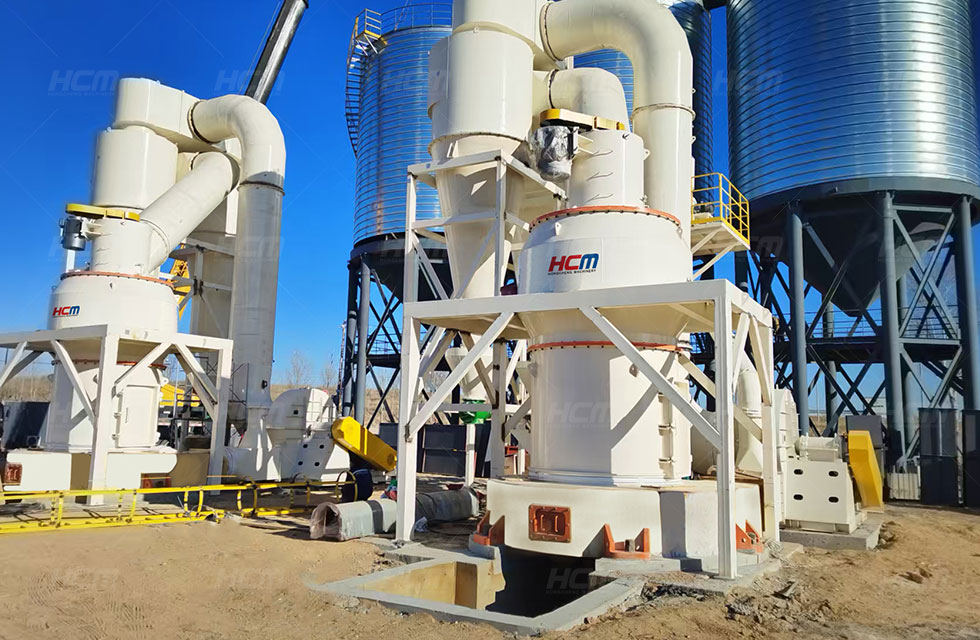
Equipment selection depends not only on the finished product but also on the characteristics of the calcium carbonate entering the mill. Feed material properties can change the operating conditions and influence the overall performance of the grinding system.
Feed size determines how much size reduction is required and whether a preliminary crushing stage may be necessary. Moisture can affect material feeding and particle separation, particularly when precise classification is required. Hardness and abrasiveness should also be considered when assessing wear and maintenance requirements.
As a result, two projects with similar fineness targets and production requirements may still need different equipment configurations. Differences in material properties and operating conditions can lead to different performance outcomes.
A practical starting point is to collect the available information on feed particle size, moisture content, mineral characteristics, and required output. If some values have not yet been established, they should be identified during the technical evaluation rather than replaced with assumptions that may not reflect actual operating conditions.
There is no single type of mill that is suitable for every calcium carbonate application. Roller mills, ball mills, and grinding systems equipped with classifiers operate on different principles. The right choice depends on the product specifications and the way the production line will be configured.
For certain applications, roller mills can be an option worth considering for non-metallic mineral processing. When particle size distribution is particularly important, the role of the classifier and the possible recirculation of particles that do not meet the target specification should also be evaluated. Ball mills may suit other process requirements, but their suitability should be assessed against the intended product and associated operating costs.
Comparing equipment solely by its advertised maximum fineness can provide an incomplete picture. It is better to examine capacity under comparable operating conditions, auxiliary equipment requirements, and expected maintenance needs. Where possible, test results obtained using representative feed material can provide a more useful basis for decision-making.
HCM (Guilin Hongcheng), a manufacturer of industrial grinding equipment, serves the mineral processing and non-metallic materials industries. When evaluating a grinding solution for calcium carbonate, the starting point should be the specific combination of feed material, target fineness, and required output—not simply the name or model of the equipment.
The purchase price is visible from the beginning, while other costs emerge during operation. Electricity consumption, wear parts, maintenance downtime, and auxiliary systems can all affect the total cost of production.
For example, a mill that appears suitable based on its rated capacity may not be the most economical option if it must operate under conditions different from those assumed to achieve the required product specifications. Similarly, a production line with poorly coordinated feeders, classifiers, or dust collection equipment may limit overall output, even when the mill itself has sufficient capacity.
It is also worth reviewing how maintenance will be performed and which components require periodic inspection. The objective is not simply to find equipment that requires the least maintenance, but to understand the resources each option needs and how those requirements fit the plant's operating arrangements.
When comparing quotations, use a consistent basis for evaluation, including target output, product fineness, operating hours, and feed conditions. Without a common reference, differences between commercial performance figures can be misleading.
Choosing a calcium carbonate grinding mill starts with the final product and continues with an assessment of feed material properties, required capacity, and operating conditions. Only then does it make sense to compare available grinding technologies and evaluate the total cost of each option.
For HCM, a meaningful technical evaluation should begin with specific information: feed size, moisture content, expected production, and the target particle size distribution. The clearer these requirements are, the more useful the comparison between potential solutions will be.
Ultimately, the goal is not to select the mill with the highest advertised figure, but to choose equipment that can meet the actual requirements of the process. This approach helps reduce uncertainty during equipment selection and provides a more reliable basis for planning a calcium carbonate grinding plant.
Looking for a calcium carbonate grinding solution? Contact Guilin Hongcheng to discuss your material properties, product specifications, and production requirements.
